


“The UK was the first country to enshrine in law, in a binding way, the objective of reaching net zero by 2050,” recalls Miya Paolucci, CEO of Engie UK. Better still, this government ambition has been accompanied by the establishment of a stable regulatory framework designed to encourage investment—with tangible results already: since 2010, the country has attracted more than £300 billion in low-carbon investments.
At a time when headwinds are affecting the sector elsewhere in the world and successive governments have taken office in the UK, this momentum continues. Since July 2024, more than £52 billion in clean energy investments have been secured, while the “Clean Power Action 2030” Plan aims to mobilise £200 billion in investment by the end of the decade, with an annual average of £40 billion.
A strategy serving the energy transition
This ambition is reflected in the Industrial Strategy published in 2025, which represents a key lever to accelerate the development of clean energy. Combining targeted public investment, support for technological innovation and partnerships with industrial players, it creates a favourable environment for investment in low-carbon solutions.
At the heart of this strategy is a new relationship between government and business, built on innovative support mechanisms. These include the Contracts for Difference (CfD) scheme, which guarantees stable prices for renewable energy producers.
The UK Government has also created a Clean Energy Supply Chain Fund, a £1 billion fund dedicated to supply chains, operated by Great British Energy—a new publicly owned company tasked with investing in clean energy and storage projects.
However, the UK grid suffers from an imbalance between the location of available renewable generation capacity and the areas where demand is growing.
“There has been a lot of investment in offshore wind in Scotland, but the major consumption centres are in the south of the country,” illustrates Engie UK’s CEO. “That electricity has to be transported, which requires very significant investment in networks. The government is aware of all these issues. It is also putting plans in place to accelerate grid connections.”
Offshore wind: consolidating global leadership
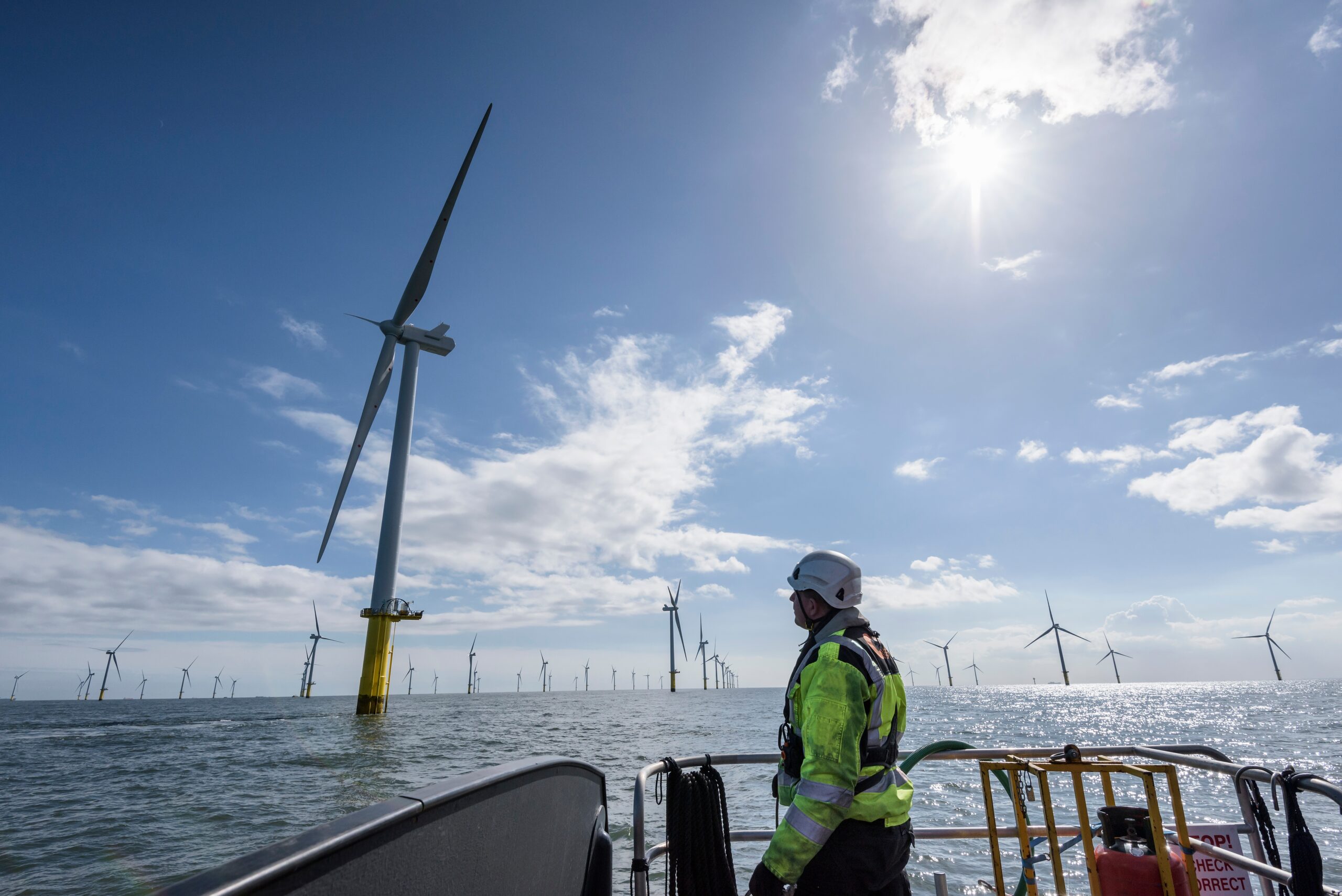
Indeed, the UK has the second-largest offshore wind capacity in the world (after China) and intends to continue strengthening its dominant position in this sector. The objective is to deploy between 43 and 50 GW of offshore wind capacity (fixed and floating) by 2030.
The country already has a mature, multi-energy supply chain stretching from the North Sea to the English Channel, with key industrial clusters in South Wales, the East Coast (Teesside, Humber), the North West (Merseyside), the Solent and Scotland. For industry players, investment opportunities span the entire value chain: advanced turbine technologies, industrialised foundations and substructures, electrical systems and cabling, installation, operations and maintenance.
To support investment in the offshore wind supply chain, the government has more than doubled the budget of the Clean Industry Bonus to £544 million and is mobilising more than £9 billion in private investment. The Energy Skills Passport, an online programme, also facilitates the transition of oil and gas workers into offshore wind.
Onshore wind: removing barriers to growth
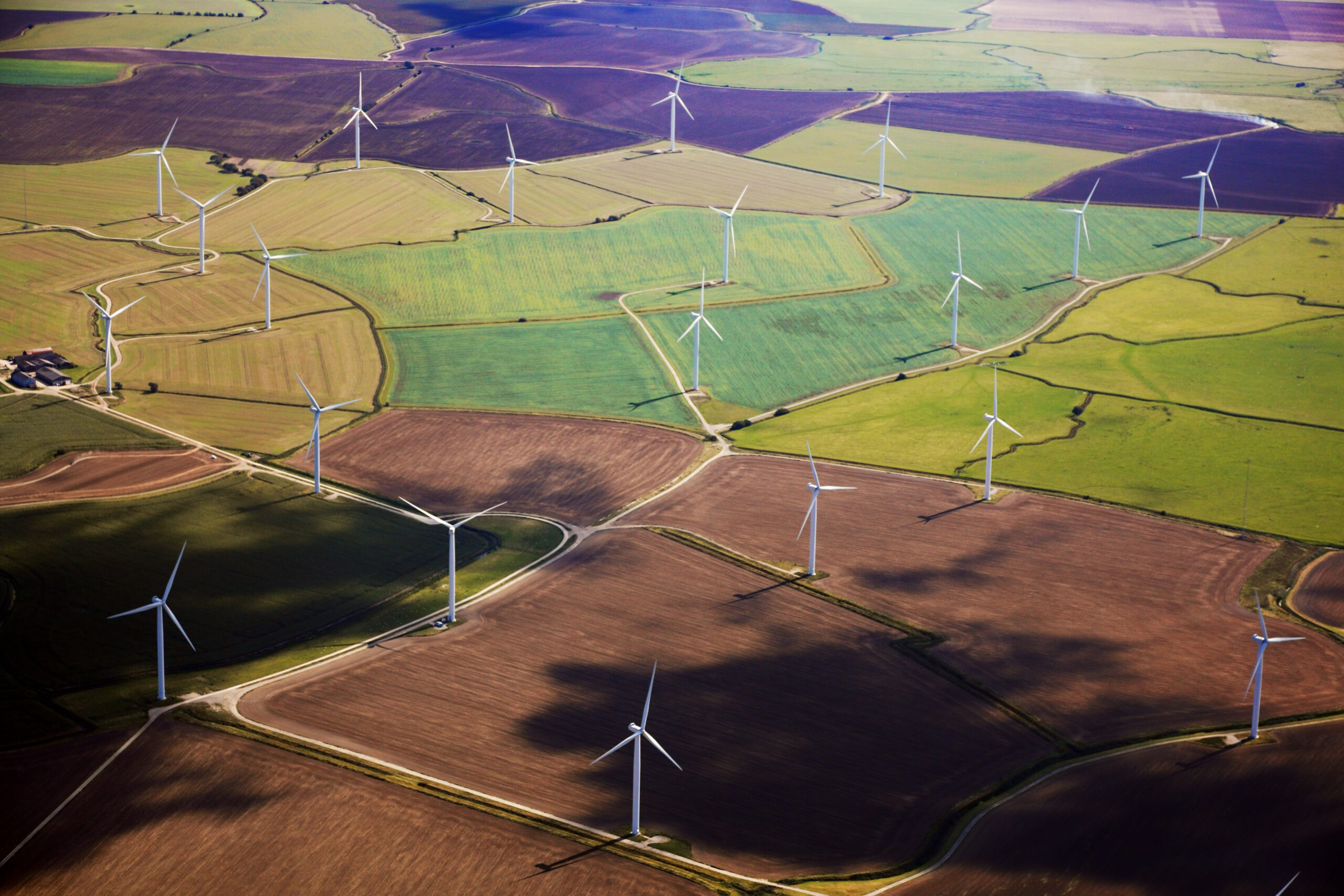
Long held back by planning restrictions, onshore wind is now experiencing a revival. The national objective is to deploy between 27 and 29 GW of capacity by 2030—an additional 12 to 14 GW compared with the 16 GW currently installed.
The lifting in 2024 of the de facto ban on onshore wind in England, combined with the reintegration of large projects into the Nationally Significant Infrastructure Projects (NSIP) regime, has significantly simplified procedures. The onshore wind taskforce is working to reduce financial, regulatory and political barriers. The project pipeline has already increased by 9.8% between 2023 and 2024.
The Engie Group, present in the UK for more than 20 years with around 1,300 employees, perfectly illustrates this investment dynamic. “In renewables, we currently have onshore wind and solar (around 200 megawatts), as well as a joint venture with EDP Renewables, Ocean Winds, one of the largest offshore wind developers and operators in Scotland, with 1.8 gigawatts already in operation,” explains Miya Paolucci.
Nuclear: a mix of tradition and innovation
In nuclear energy, the UK is home to some of the world’s most advanced nuclear companies— such as Urenco (the world’s second-largest uranium enrichment group), EDF Energy (the UK’s largest electricity producer and supplier since its acquisition of British Energy in 2008) and Rolls-Royce (notably a designer of Small Modular Reactors). The nuclear sector employs more than 96,000 skilled professionals.
To accelerate its development, the government is focusing on three complementary areas: large-scale reactors, small modular reactors (SMRs) and advanced technologies such as high-assay low-enriched uranium.
To this end, an Advanced Nuclear Fund has been endowed with £385 million to invest in the next generation of nuclear technologies. This includes up to £215 million for SMRs and up to £170 million for a research and development programme aimed at delivering a demonstration of an Advanced Modular Reactor (AMR) by the early 2030s.
The UK is also positioning itself as a leader in nuclear fusion, a technology still at the R&D stage that promises abundant, clean and safe energy. The Culham Fusion Cluster brings together more than 200 public and private organisations on a dedicated campus.
Here again, the government is investing heavily: £2.5 billion for the world’s first prototype fusion power plant (STEP – Spherical Tokamak for Energy Production), currently under construction in Nottinghamshire, and £410 million in additional funding for 2025–2026. The Fusion Centre for Doctoral Training—a collaboration between six leading UK universities—ensures the training of highly qualified personnel.
Hydrogen: decarbonising hard-to-abate sectors
Finally, low-carbon hydrogen has been identified as a key solution to decarbonise heavy industry, freight transport and provide long-duration energy storage.
The Hydrogen Production Business Model offers long-term support to producers by bridging the cost gap with conventional fossil fuels, through project financing mechanisms delivered via Hydrogen Allocation Rounds, the third of which is scheduled for 2026. This proactive approach has already convinced Engie: “In hydrogen storage, the government wants to launch a tender this year, and we intend to take part. It would be the first project of its kind on a global scale,” emphasises Miya Paolucci.
In addition, from 2031 onwards, the first regional hydrogen network will benefit from more than £500 million in government support to connect producers and end users in industry and power generation.
Investment and innovation opportunities span the entire value chain: production (steam reforming, carbon capture, electrolysers), storage (above-ground and underground), distribution (pipelines and road transport) and applications (power generation, heavy transport, chemical production).
An attractive regulatory and financial framework
The UK Government’s overall approach is praised by Miya Paolucci, who notes that “the UK has been a pioneer in many investment support mechanisms. It is the country that invented capacity markets and Contracts for Difference, which were subsequently adopted by many European countries. These mechanisms show a desire to stimulate competition while giving investors the long-term visibility they need.”
Like any international investor, Engie places great importance on the stability of public policy. “When you invest in an energy asset, you are investing for several decades, not just the next five years,” the CEO reminds us. “The political calendar is much more short-term than our investments. It’s important for this government to be there to support us, but it’s also a question of the country’s fundamentals.”
On this point, Miya Paolucci remains confident: “As everywhere, a public debate is emerging around the energy transition. But fundamentally, the British population consistently expresses in surveys that sustainability remains among its top three concerns. Public opinion is overwhelmingly supportive of this transition.”
The commercial department of the British Embassy in Paris supports French companies in their plans to set up operations in the UK. Click here to find out more.


